


Your Body's Hidden Communication Network: GLP1, Gut Health & Metabolic Balance
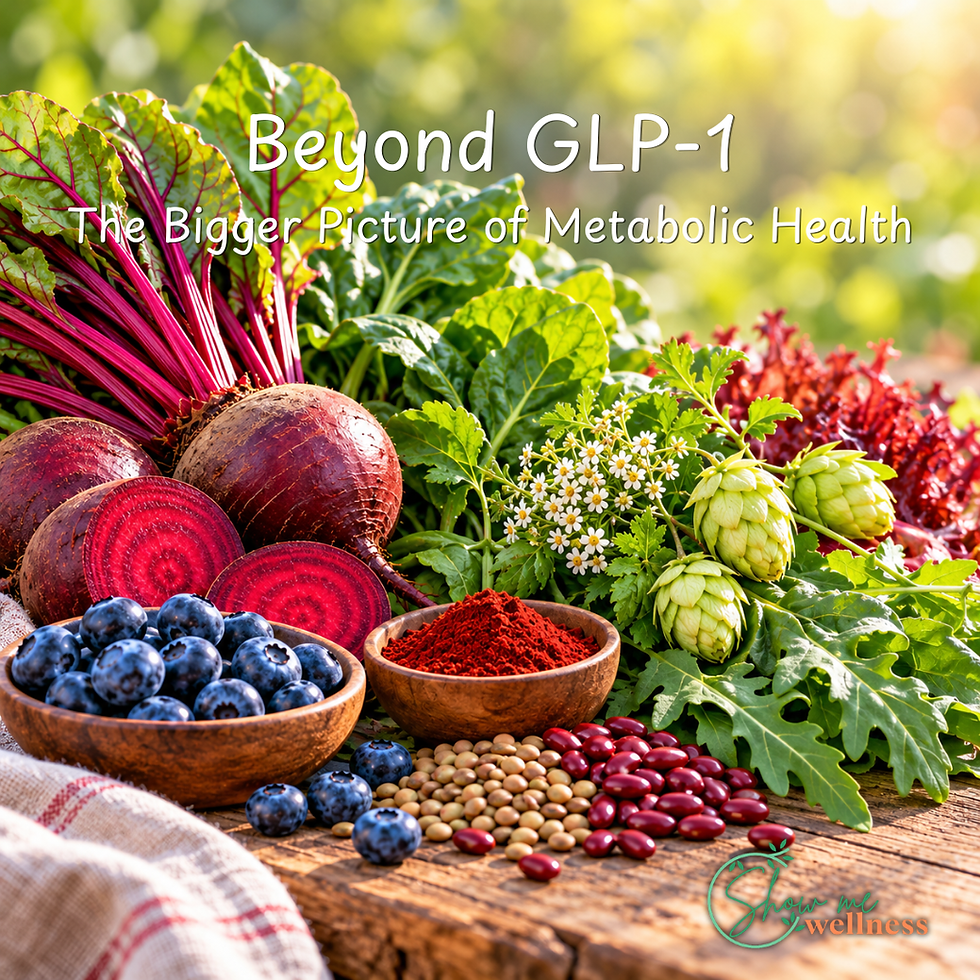
Why understanding digestion, hormones, circulation, and whole-food nutrition may change the way you think about your health.
Unless you've been avoiding the news lately, you've probably heard about GLP-1.
It's become one of the most talked-about hormones in health and wellness, largely because of the growing popularity of medications associated with weight management.
But here's something that often gets overlooked:
Your body has been producing GLP-1 naturally all along.
And GLP-1 is about much more than weight loss.
It's part of an extraordinary communication network connecting your digestive system, brain, pancreas, and metabolism.
Understanding that connection opens the door to a much bigger conversation about how our daily choices influence our health.
Your Gut Does More Than Digest Food
When we think about digestion, we typically think about breaking down food, absorbing nutrients, and eliminating waste.
But your digestive tract is also an important hormone-producing organ.
Specialized cells in the intestinal lining, called L-cells, release a hormone known as glucagon-like peptide-1, or GLP-1.
When you eat, GLP-1 helps communicate important information throughout your body.
It helps:
Signal feelings of fullness and satisfaction after meals.
Support insulin release in response to rising blood glucose.
Help regulate how quickly food leaves the stomach.
Coordinate communication between the digestive system and brain.
Think about that for a moment.
Your digestive tract is constantly communicating with other organs, helping your body determine when you've eaten enough, how to manage incoming nutrients, and how to maintain metabolic balance.
Digestion isn't simply about what happens to your food. It's also about the messages your body receives from that food.
How Did We Get Here?
If our bodies naturally produce hormones that help regulate appetite and metabolism, why are so many people struggling with these processes?
It's tempting to look for one explanation, such as insufficient GLP-1.
But metabolic health is far more complex.
Not everyone experiencing appetite challenges, weight gain, or blood sugar fluctuations has low GLP-1. Sometimes the difficulty involves how multiple hormonal and metabolic systems respond to one another.
And this is where our modern lifestyle deserves attention.
Consider how much our food environment has changed.
Many people regularly consume highly processed foods that provide abundant calories but relatively little fiber. Meals are often rushed, sleep is shortened, stress becomes a daily companion, and movement is limited.
Over time, these patterns can influence insulin sensitivity, appetite regulation, gut microbial activity, and metabolic health.
Rather than viewing these as isolated problems, what if we started looking at how they're connected?
The Gut Microbiome: A Missing Piece of the Conversation
Your digestive tract contains trillions of microorganisms collectively known as the gut microbiome.
These microorganisms participate in digestion, nutrient metabolism, immune regulation, and communication with the intestinal lining.
One particularly interesting connection involves dietary fiber and GLP-1.
When we eat fiber-rich plant foods, certain beneficial gut bacteria ferment some of that fiber, producing compounds called short-chain fatty acids. These compounds, including butyrate, acetate, and propionate, have important roles in intestinal health. They can also interact with receptors on intestinal L-cells, influencing GLP-1 secretion.
In other words, the relationship between food and appetite signaling doesn't end when we swallow our meal. Our gut microorganisms participate in that conversation, too.
This is one reason whole-food nutrition matters. Beans, lentils, vegetables, fruits, and other fiber-rich plant foods do more than provide vitamins and minerals. They supply nourishment for the microbial communities living inside us. And those communities help influence the environment in which our digestive and metabolic systems function.
When we nourish our gut, we're supporting much more than digestion.
Bitter Foods: An Interesting Connection to Digestive Signaling
Have you ever wondered why bitter foods have been used traditionally to support digestion?
Plants contain naturally occurring bitter compounds, and our bodies have specialized receptors capable of detecting them.
Interestingly, bitter taste receptors aren't found exclusively on the tongue.
They're also present in parts of the gastrointestinal tract, where they participate in nutrient sensing and digestive signaling.
Researchers are exploring how certain bitter botanical compounds influence gut hormones, including GLP-1 and other hormones involved in feelings of fullness.
This is an exciting area of nutritional research, although the effects depend on the specific compounds and how they're consumed.
Foods and botanicals with bitter characteristics include:
Arugula and other bitter leafy greens
Radicchio and endive
Dandelion greens
Hops
Certain traditional culinary and medicinal herbs
These foods and plants contain a variety of naturally occurring compounds that interact with our digestive systems. It's another reminder that the relationship between plants and human physiology is remarkably complex.
The Surprising Connection Between Circulation and Cellular Health
Now let's look at another connection that doesn't receive nearly as much attention.
Healthy metabolism depends on healthy circulation.
Our blood vessels do much more than transport blood from one location to another.
They help deliver oxygen and nutrients to tissues throughout the body, supporting the cells responsible for producing energy and maintaining normal function.
One important molecule involved in this process is nitric oxide.
Nitric oxide is produced naturally by the body and helps blood vessels relax, supporting healthy blood flow. Certain vegetables, particularly beets and leafy greens, contain naturally occurring dietary nitrates.
Through a series of biological processes involving bacteria in the mouth and enzymes throughout the body, dietary nitrates can contribute to nitric oxide production.
This is a fascinating example of how food, microorganisms, circulation, and cellular function are interconnected. Beets are particularly interesting because they provide dietary nitrates along with colorful plant compounds called betalains. Red and green leafy vegetables, including spinach, arugula, and certain varieties of mountain spinach, also provide valuable phytonutrients.
But the benefits of colorful foods go far beyond dietary nitrates.
The Power of Colorful Foods and Phytonutrients
Plants and algae produce a remarkable variety of naturally occurring compounds that contribute to their colors and biological functions.
Many of these compounds are known as phytonutrients.
For example, beets contain betalains, the pigments responsible for their beautiful deep-red color.
Berries contain anthocyanins, which give blueberries, blackberries, and other fruits their rich purple and blue colors. And certain microalgae produce a particularly interesting carotenoid called astaxanthin.
Astaxanthin has attracted attention for its antioxidant activity and its ability to interact with cell membranes, where it can help protect against oxidative stress.
Researchers are also exploring its potential role in cardiovascular health, inflammatory signaling, and healthy cellular function. What's fascinating is that these compounds work through different biological pathways. Some participate in antioxidant defense. Others influence cellular signaling, vascular function, or the body's response to everyday metabolic demands.
Nature provides an extraordinary variety of nutrients and protective compounds, each contributing something unique to the bigger picture of health.
And that's one reason we emphasize colorful, nutrient-dense whole foods rather than focusing on one isolated nutrient. Think about the nutritional complexity of a meal containing leafy greens, beans, colorful vegetables, herbs, and berries. You're receiving fiber, vitamins, minerals, and numerous naturally occurring plant compounds—all in one meal. These nutrients don't all perform the same function, but together they contribute to the many interconnected systems that keep our bodies functioning.
Nature rarely delivers nutrition one isolated compound at a time.
And perhaps that's something worth remembering in a world constantly searching for the next miracle ingredient.
What Can We Do to Support These Natural Processes?
The encouraging part of this conversation is that supporting metabolic health doesn't necessarily begin with something complicated.
It begins with understanding what our bodies need to function well.
Nourish your gut.
Include a variety of fiber-rich whole plant foods, especially beans, lentils, vegetables, and fruits. Diversity provides different nutrients and fibers that help nourish the gut microbiome.
Eat a colorful variety of plants.
Deep-red beets, leafy greens, berries, and other colorful vegetables offer different phytonutrients that participate in overall health.
Move your body regularly.
Walking, strength training, and other forms of movement support insulin sensitivity, circulation, and healthy metabolic function.
Prioritize restorative sleep.
Sleep plays an important role in appetite regulation, glucose metabolism, and hormonal communication.
Pay attention to stress.
Chronic stress influences the nervous system, digestive function, sleep, and metabolic regulation.
Consider your individual needs.
Two people can have similar symptoms but very different underlying contributors. Nutrition, digestion, activity, sleep, and health history all deserve consideration.
None of these habits works in isolation.
Their greatest value comes from how they work together.
The Bigger Picture: Supporting the Body, Not Just Chasing Symptoms
At Show Me Wellness, we believe the human body was designed with an extraordinary capacity for regulation and balance. Every day, countless systems communicate and adjust in response to what we eat, how we move, how we sleep, and the environment around us.
GLP-1 is one part of that story.
Nitric oxide is another.
Our gut microbiome, digestive enzymes, hormones, blood vessels, and cells are all participating in a much larger process.
When we begin to understand these connections, we can shift our focus from simply managing individual symptoms to asking more meaningful questions.
What obstacles might be interfering with normal function?
Are we providing the nutrients our bodies need?
Are our daily habits supporting or challenging our natural regulatory processes?
And what might change if we started addressing those foundational needs?
Because lasting wellness isn't about one hormone, one nutrient, or one supplement. It's about supporting the whole person.
That's the philosophy behind Simple Sustainable Whole Food Living—and the foundation of our approach at Show Me Wellness.
Show Me Wellness | Simple Sustainable Whole Food Living
For more whole-person wellness education, explore our Healthy Insights blog at showmewellness4u.com.


Comments